What is ionic contamination on a circuit board?
Ionic contamination refers to residual substances on the product surface that have not been cleaned off. In a humid environment they ionise into freely movable conductive ions carrying positive and negative charges, posing a risk to the quality of the circuit board.
Sources of ionic contamination on circuit boards
Ionic contamination mainly comes from residues introduced during production processes such as acid cleaning, flux residue after soldering and cleaning agents, as well as pollution in the atmosphere and residues introduced by human activity.
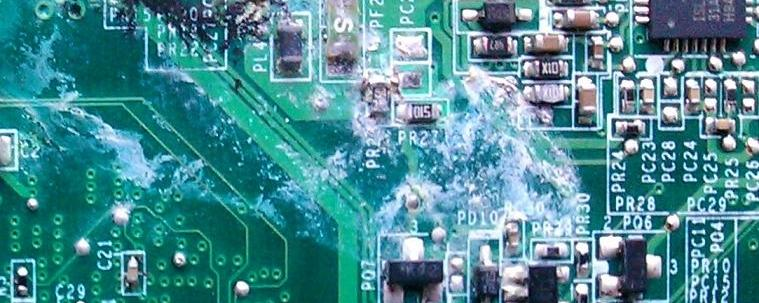
Hazards of circuit board contamination
When the environment is humid, ionic contamination rapidly reduces the insulation resistance of the product surface. Excessive levels of these residues can easily cause failures such as corrosion, leakage, short circuits, electrochemical migration and electrical faults.
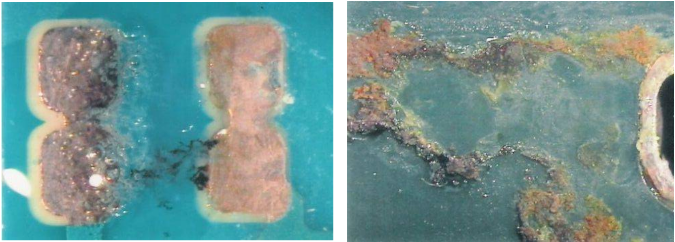
Types of ionic contamination testing
Ionic contamination testing is divided into total ionic contamination testing (sodium chloride equivalent method) and individual ion content testing (ion chromatography). Total ionic contamination generally indicates the degree of cleanliness of the circuit board surface but cannot identify the specific ion species, whereas ion chromatography can accurately analyse the type and quantity of residues on the board surface.
IPC-TM-650 2.3.25D: detection and measurement of ionisable surface contamination by resistivity of solvent extract (ROSE)
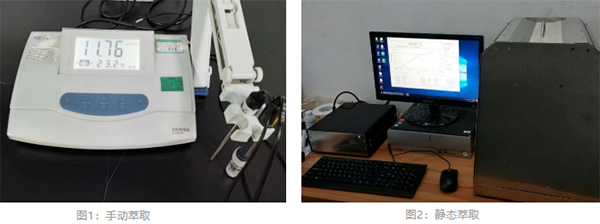
The amount of conductive ions in solution can be expressed simply by the conductivity of the solution. Based on the conductivity of a known amount of sodium chloride in the extract, the content of unknown conductive ions can be derived simply. The resistivity of the solution is measured with a conductivity tester, and the result is expressed as sodium chloride equivalent per square centimetre of surface area.
Test results:

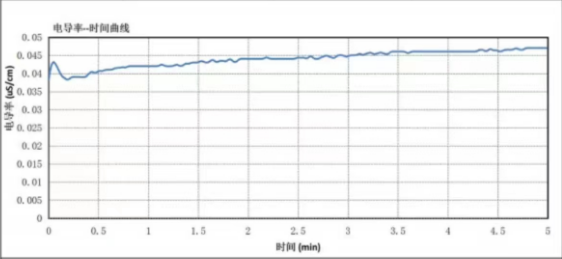
Static extraction curve
IPC-TM-650 2.3.28B: ionic analysis of circuit boards by ion chromatography
Ion chromatography is based on differences in the partition coefficients of the component ions of a mixture between the mobile phase and the stationary phase. As the ions move relatively between the two phases, each ion is partitioned many times so that the component ions are separated. The essence of the process is the partition equilibrium of the mixed ions to be separated between the stationary and mobile phases. The separated ions are then detected qualitatively with a conductivity or ultraviolet detector and analysed quantitatively in combination with the chromatogram.
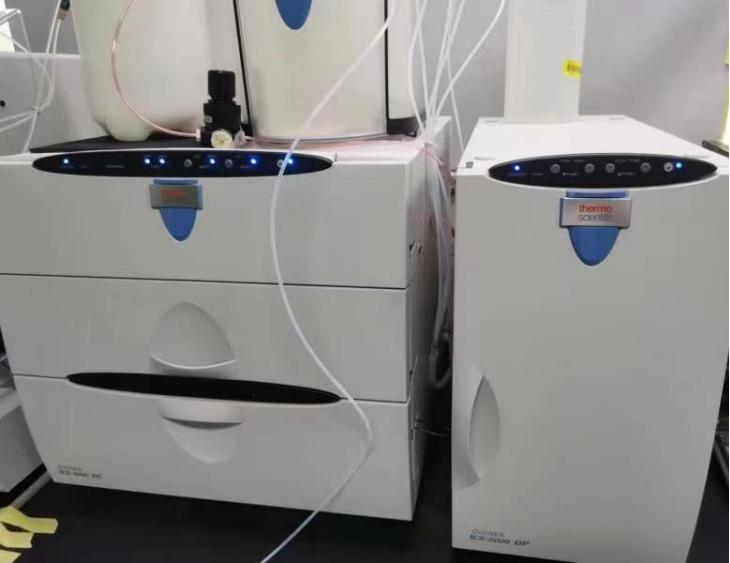
IC ion chromatograph
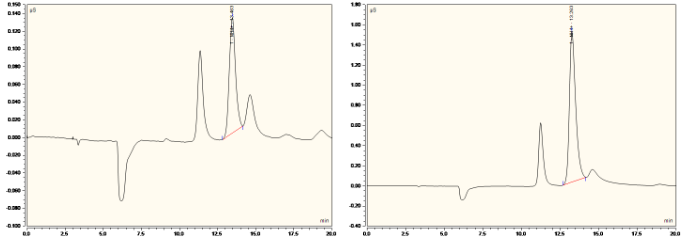
Test curve
Ion chromatography test process

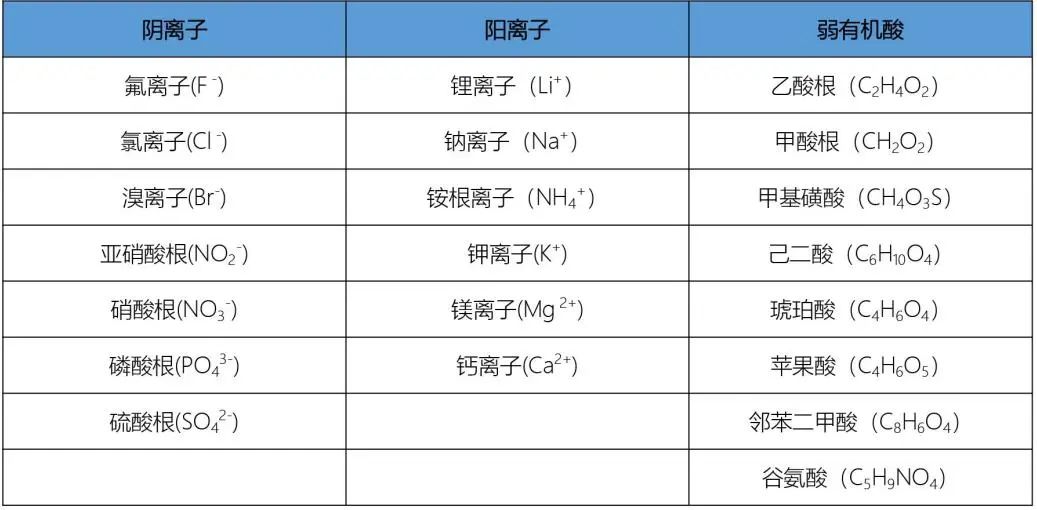
Ion species









 WeChat Official Account
 Submit successfully