AEC-Q standards are a set of strict specifications issued by the Automotive Electronics Council to ensure that electronic components used in vehicles maintain high reliability and stable performance in harsh operating environments. Among these specifications, whisker testing plays a vital role, assessing the potential for electronic components to form tin whiskers during their expected service life. The NTEK AEC-Q laboratory has advanced test equipment and an experienced technical team and can provide whisker testing services that comply with AEC-Q standards.
Whisker testing is essential to the safety and reliability of automotive electronic systems. It helps ensure that components do not fail when exposed to high temperature, humidity and other environmental stress.
What is a whisker?
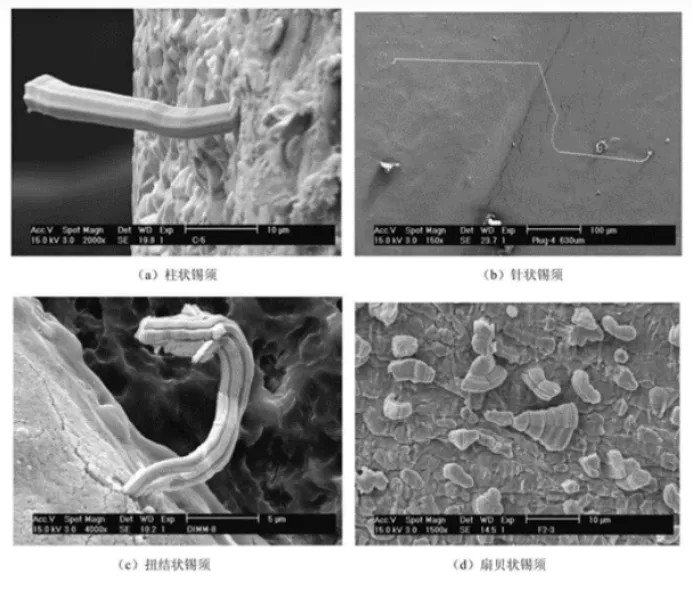
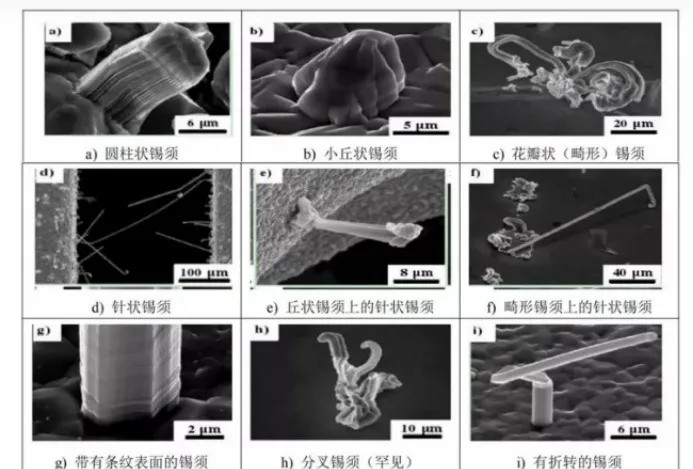
Tin whiskers are fine crystalline filaments that can grow on the soldered surfaces of electronic components. Such growth can cause short circuits, malfunction and even failure. Whiskers pose several potential hazards to electronic equipment and circuit boards, including short circuit risk, signal interference, insulation breakdown, heat accumulation and environmental contamination.
Purpose of whisker testing
Whisker testing simulates component operation under high temperature and high humidity to assess whether solder joints may form whiskers and thereby affect reliability. The presence of whiskers can pose hazards to electronic equipment and circuit boards such as short circuit risk and signal interference.
How whiskers form
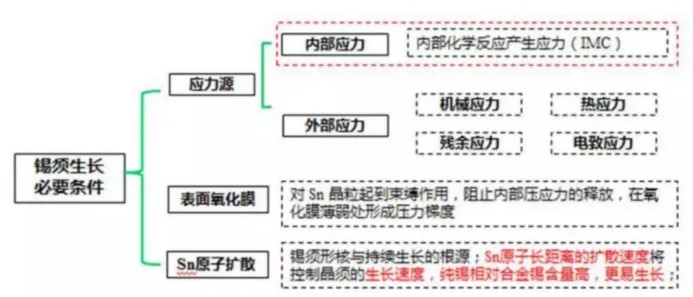
Whisker growth is a room temperature creep behaviour driven by a stress gradient. Three conditions are required: a stress source, constraint by an oxide layer, and long range diffusion of tin atoms. The driving force is mainly internal stress, such as the compressive stress that the intermetallic compound Cu6Sn5 formed at the Cu/Sn interface exerts on the tin layer.
Growth process
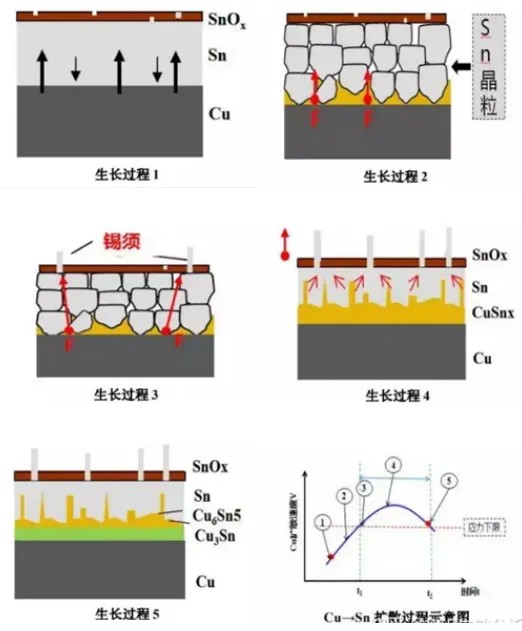
Whisker growth can be divided into five stages: interdiffusion of atoms at the Cu/Sn interface, grain boundary effects, generation of compressive stress, continued growth of the intermetallic layer, and slowing of the Cu6Sn5 reaction. Growth itself passes through an incubation period, a rapid growth period and a slow growth period that ends in cessation.
Test process
Whisker growth is a long term reliability issue, so a suitable accelerated test method and acceleration factor must be established. JESD22-A121 provides a reference accelerated reliability test for whisker growth, methods for measuring whisker length and the basis for failure judgement. The process involves preconditioning samples from different lots of multi-lead components, inspecting terminations at different time points, measuring whisker length and running tests under different conditions.
Mitigation methods include replacing pure tin plating with alloy plating, annealing, plating nickel before tin on copper, selecting an appropriate plating thickness and optimising the plating bath and plating process. The expert team at the NTEK AEC-Q laboratory can provide customised whisker analysis to help companies improve product quality and reduce production risk.
Application and significance of whisker testing
Whisker testing helps manufacturers assess problems that components may encounter in actual use and improves product reliability and stability. Components that comply with AEC-Q standards gain wider recognition for automotive electronics applications once they pass whisker testing. Through AEC-Q whisker testing, manufacturers can better ensure the reliability and quality of their products in automotive electronics and meet the industry's demand for high quality electronic components.
Conclusion
Whisker testing under AEC-Q standards is an important part of reliability assessment for automotive electronic components. A thorough understanding of the formation mechanism, growth process and mitigation methods allows manufacturers to improve performance in extreme environments and ensure the safety and stability of automotive electronic systems. Whisker testing improves the quality of individual components and is also significant for the healthy development of the automotive electronics industry as a whole.
About NTEK
NTEK Group was founded in 2009 and is headquartered in Shenzhen. The group provides quality research and technical services covering R&D verification, inspection and testing, failure analysis, simulation and market access for intelligent connected vehicles, electronic communications and new energy.
NTEK has extensive experience in automotive-grade electronic certification and has helped more than 100 companies pass AEC-Q series certification. Driven by the need of vehicle makers to localise automotive-grade components and supported by the domestic semiconductor industry, NTEK provides comprehensive testing and certification services, applying AEC-Q automotive standards to control the safety and quality of automotive components, supporting the growth of domestic automotive-grade components and adding new momentum to the intelligent vehicle safety system.









 WeChat Official Account
 Submit successfully